


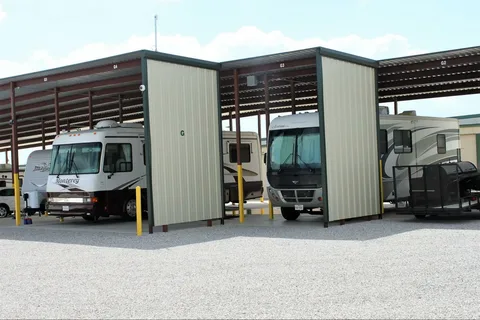
Designing storage for large motorhomes demands far more than extra square footage. Structural details determine whether a facility truly protects high-value rigs or simply provides oversized shelter. The difference becomes clear in how well RV storage units handle weight, height, movement, and long-term stress.
Reinforced Roof Spans Engineered for Oversized Vehicle Clearance
Large motorhomes require roof systems that span wide distances without sagging or transferring stress to vehicles below. Reinforced roof spans are designed to remain rigid even when covering broad bays, preventing deflection that can reduce clearance over time. This engineering approach protects tall motorhomes from gradual roof movement that could interfere with rooftop components or antennas.
Beyond clearance, reinforced spans also improve durability under wind and weather loads. Roof structures built for oversized vehicles account for uplift forces and seasonal expansion, maintaining consistent spacing year after year. Well-built RV storage units use these structural reinforcements to ensure the roof remains stable regardless of climate or time in service.
Wide-bay Entry Dimensions Accommodating Extended Motorhome Widths
Entry width plays a major role in safe storage access for large rigs. Motorhomes often exceed standard vehicle widths due to mirrors, slide-outs, or body design, making narrow openings risky. Wide-bay entries reduce the chance of contact with doors, framing, or adjacent units during entry and exit.
Generous bay dimensions also lower stress on drivers maneuvering heavy vehicles. Extra clearance allows smoother alignment without repeated adjustments, reducing tire wear and accidental damage. Facilities offering RV storage units with properly sized entries provide a practical advantage that becomes noticeable from the first visit.
Load-rated Slab Foundations Supporting Extreme Axle Weights
The weight of a fully equipped motorhome places significant pressure on concrete slabs. Load-rated foundations distribute axle weight evenly, preventing cracking, settling, or surface deformation over time. These slabs are engineered with thickness, reinforcement, and soil preparation suited for extreme loads.
A properly designed foundation also protects the structure above it. Stable slabs keep walls, columns, and doors aligned, ensuring long-term usability. RV storage units built on load-rated foundations maintain integrity even as heavy vehicles are parked for extended periods.
Steel Framing Systems Resisting Torsional Stress over Time
Steel framing provides strength that wood or light-gauge materials cannot match at large scales. Motorhomes introduce torsional stress as they enter, park, and settle, especially in wider bays. Steel framing resists twisting and shifting that can occur under these repeated forces. Over years of use, this resistance helps preserve door alignment, wall straightness, and roof positioning. Facilities designed with steel framing systems maintain consistent clearances and structural reliability, making them better suited for long-term RV storage units rather than short-term solutions.
Vertical Clearance Tolerances Preventing Rooftop Equipment Damage
Vertical clearance is not just about overall height; tolerances matter just as much. Air conditioners, solar panels, satellite domes, and vents add unpredictable height variations to motorhomes. Storage units designed with precise clearance allowances prevent accidental contact during parking or door operation. Consistent vertical spacing also accounts for suspension movement as vehicles settle under their own weight. Adequate tolerances ensure rooftop equipment remains untouched even after prolonged storage. RV owners searching for storage units near me benefit from facilities that anticipate these details rather than relying on minimal height standards.
Column Spacing Layouts Enabling Safe Maneuvering of Large Rigs
Interior column placement influences how easily large motorhomes can be positioned within a unit. Wide spacing reduces tight turns and blind spots that increase the risk of impact. Structural layouts that minimize obstructions allow drivers to enter and exit without complex maneuvers. Thoughtful column spacing also improves airflow and visibility inside the unit. Open layouts reduce the sense of confinement and provide better alignment cues. RV storage units designed with these considerations support safer handling of long, heavy vehicles.
Access Lane Geometry Supporting Long-wheelbase Turning Radius
Access lanes determine whether a facility feels functional or restrictive. Long-wheelbase motorhomes require broader turning arcs than standard vehicles, especially when entering or exiting storage bays. Lane geometry designed for these turning radii reduces strain on steering components and driver concentration. Well-planned access lanes also improve traffic flow within the property. Wider curves and clear sightlines lower congestion and reduce the chance of close encounters between vehicles. Storage units near me that account for access geometry offer smoother operations for both short visits and seasonal storage cycles.
Facilities that integrate these structural considerations into their RV storage units create environments where large motorhomes remain protected, accessible, and structurally supported, which is why many owners turn to Storage Partner for solutions designed around the real demands of oversized rigs.
