


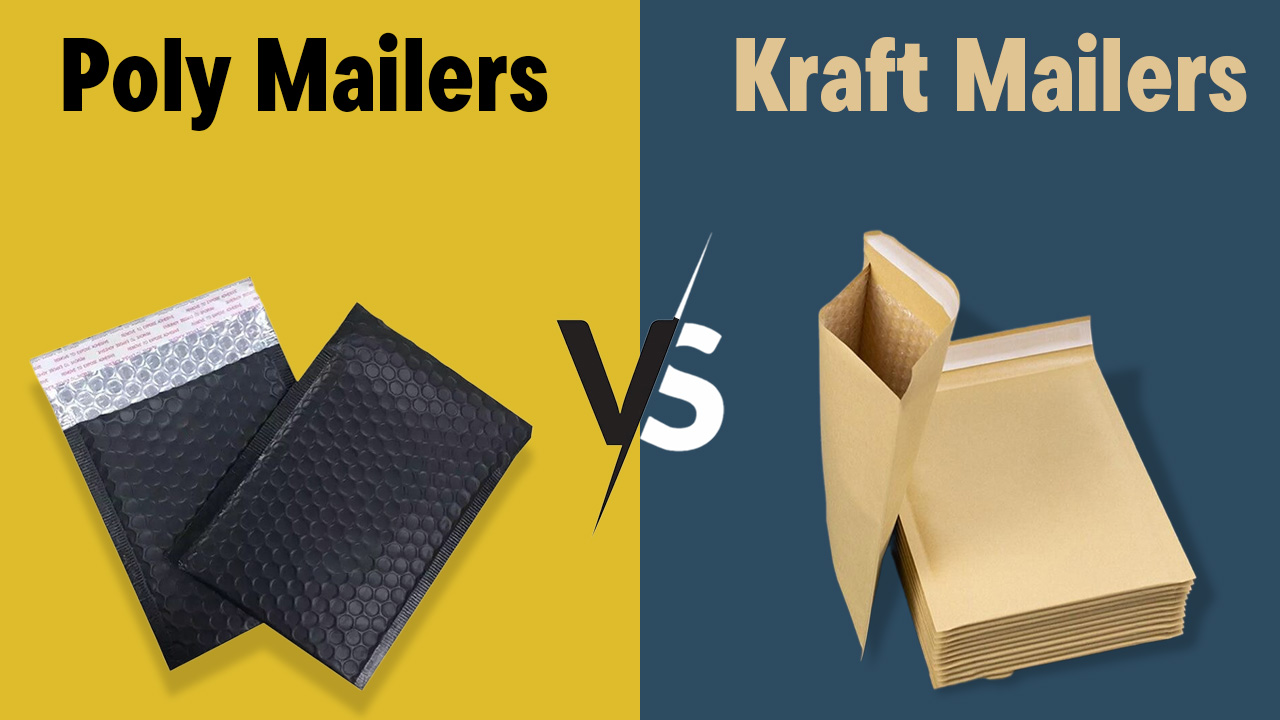
When it comes to eCommerce packaging, choosing between kraft and poly bubble mailers can directly impact shipping costs, product safety, and customer experience. Both options offer built-in cushioning, but poly bubble mailers—a popular choice for modern online sellers—stand out for their lightweight, water-resistant design and cost efficiency. Meanwhile, kraft mailers bring a more traditional, eco-friendly appeal. So, which one is right for your business? Let’s break it down in detail.
What Are Bubble Mailers?
Bubble mailers are padded envelopes with an inner layer of bubble wrap designed to protect items during transit. They’re widely used as a lightweight alternative to boxes, especially for small or semi-fragile products.
There are two main types:
- Kraft bubble mailers (paper exterior)
- Poly bubble mailers (plastic exterior)
What Are Kraft Bubble Mailers?
Kraft bubble mailers are made from kraft paper, a durable material derived from wood pulp. They feature a paper outer layer and a bubble-lined interior for cushioning.
Key Characteristics:
- Semi-rigid structure (helps prevent bending)
- Natural, eco-friendly appearance
- Easy to label or stamp
- Slightly heavier than poly options
What Are Poly Bubble Mailers?
Poly bubble mailers are made from polyethylene (plastic) and also include a bubble-lined interior. They are known for their flexibility, durability, and moisture resistance.
Key Characteristics:
- Lightweight and flexible
- Water-resistant exterior
- Tear- and puncture-resistant
- Ideal for high-volume shipping
Pros and Cons of Kraft Bubble Mailers
✅ Pros
- Better structure and rigidity
Kraft mailers help keep items like documents and books flat, reducing bending or folding during transit. - Strong cushioning
They often have larger internal bubbles, offering slightly better protection for delicate flat items. - Eco-friendly appeal
The paper exterior is easier to recycle and aligns well with sustainable branding. - Premium presentation
The natural look gives a professional, handcrafted feel—great for boutique brands.
❌ Cons
- Poor moisture resistance
Kraft paper absorbs water and can weaken in humid or rainy conditions. - Slightly heavier
This can increase shipping costs, especially at scale. - Limited flexibility
Not ideal for bulky or irregularly shaped items.
Pros and Cons of Poly Bubble Mailers
✅ Pros
- Water-resistant and weatherproof
Poly mailers protect contents from rain, humidity, and spills—making them ideal for global shipping. - Lightweight and cost-effective
They reduce postage costs and storage space, especially in bulk shipping. - Highly durable
Resistant to tearing and punctures, even in rough handling conditions. - Flexible and space-efficient
They conform to product shapes, minimizing wasted space.
❌ Cons
- Less eco-friendly perception
Plastic-based material may not appeal to environmentally conscious customers. - Less rigid protection
Smaller bubble size and flexibility mean slightly less structural support for flat items. - Basic aesthetic (unless customized)
Standard versions may lack the premium feel of kraft packaging.
Side-by-Side Comparison
| Feature | Kraft Bubble Mailers | Poly Bubble Mailers |
| Material | Paper (kraft) | Polyethylene (plastic) |
| Weight | Slightly heavier | Very lightweight |
| Durability | Moderate | High |
| Moisture Resistance | Low | Excellent |
| Flexibility | Low (rigid) | High (flexible) |
| Cushioning | Strong (larger bubbles) | Good |
| Eco-Friendliness | Better (paper-based) | Limited (plastic-based) |
| Cost Efficiency | Moderate | High |
| Best For | Documents, books | Clothing, accessories |
Best Uses for Kraft Bubble Mailers
Kraft mailers work best when presentation and structure matter more than weather resistance.
Ideal for:
- Books and magazines
- Documents and certificates
- Photos and prints
- Flat, semi-fragile items
- Eco-conscious brands
They’re especially useful when you want to create a premium unboxing experience.
Best Uses for Poly Bubble Mailers
Poly bubble mailers are ideal when durability, cost savings, and weather protection are priorities.
Ideal for:
- Clothing and textiles
- Electronics accessories
- Cosmetics and beauty products
- Small eCommerce items
- High-volume shipping
They are widely preferred for fast-moving online businesses due to their efficiency and reliability.
Which One Should You Choose?
The right choice depends on your shipping needs:
- Choose kraft mailers if:
- You ship flat or rigid items
- Branding and eco appeal matter
- Shipping conditions are controlled
- Choose poly bubble mailers if:
- You ship soft or irregular items
- You want to reduce shipping costs
- Your packages face moisture or rough handling
Many businesses actually use both types, selecting the best option based on the product.
Final Thoughts
There’s no one-size-fits-all answer in the kraft vs poly debate. While kraft mailers offer structure and sustainability, poly bubble mailers dominate in durability, flexibility, and cost efficiency.
If your priority is scalability and protection, poly is often the smarter choice. But if your brand values presentation and eco-conscious packaging, kraft mailers still hold strong.
In the end, the best packaging strategy is not choosing one—it’s knowing when to use each.
