


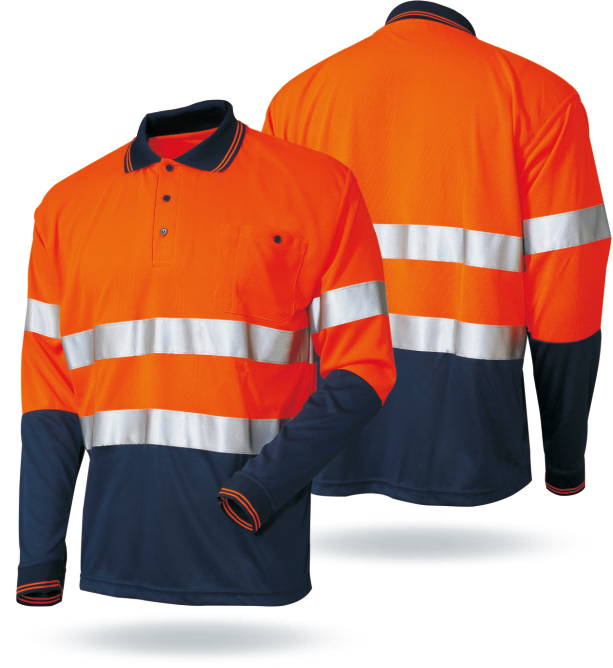
For installation crews and seasonal facility teams performing physically demanding work, the garment worn closest to the body directly affects comfort, focus, and sustained performance through a full shift. Conventional safety garments address visibility compliance but rarely prioritize moisture management, breathability, or the thermal comfort of workers who are actively exerting rather than standing stationary. High-visibility shirts dri-fit construction closes that gap — combining ANSI-compliant fluorescent fabric and retroreflective striping with athletic performance materials engineered to wick perspiration, regulate temperature, and maintain physical comfort across the sustained demands of commercial installation and seasonal operations.
Why Performance Fabric Changes the Safety Garment Equation
Standard safety vests and jackets address compliance and outer visibility effectively but are designed as external layers — not garments engineered to manage the thermal and moisture conditions of a worker’s body during sustained physical effort.
High-volume installation work is genuinely physical. Rigging display hardware, climbing ladders, managing electrical components across large commercial properties, and transporting equipment through warehouses and event venues generates sustained heat and perspiration that cotton-blend safety shirts and conventional base layers cannot manage efficiently. Moisture-wicking polyester fabrics — the technical core of dri-fit performance construction — pull perspiration away from the skin, accelerate evaporation, and maintain a drier, more comfortable microclimate against the body throughout the workday.
For workers performing at physical intensity across the long shift schedules of holiday installation seasons, this difference in base layer performance produces measurable effects on sustained output, end-of-shift comfort, and the consistency with which workers maintain their PPE without modification or removal.
ANSI Compliance in a Performance Shirt: What to Verify Before Purchasing
High-visibility performance shirts can achieve ANSI/ISEA 107 Class 2 compliance — the standard applicable to most commercial installation and seasonal facility environments — when correctly constructed with adequate fluorescent background material and retroreflective striping in compliant configurations.
Not every brightly colored performance shirt meets this standard, and the distinction carries real implications for employers with compliance obligations. A shirt that is fluorescent in color without meeting the minimum background material area and retroreflective stripe width requirements of ANSI/ISEA 107 is not certified PPE — it is a visible garment, and those are not equivalent categories under occupational safety standards.
When specifying high-visibility performance shirts for professional crews, confirm that each garment carries documented ANSI Class 2 certification against the current standard revision, and that retroreflective elements are stitched or bonded in a manner that sustains performance through commercial laundering cycles rather than degrading after initial washes.
When a High-Visibility Performance Shirt Is the Right Primary Garment
Understanding when a performance shirt serves as the primary safety garment — rather than a supplementary layer under a vest or jacket — helps managers make accurate PPE specifications across varied operating environments and seasonal conditions.
Performance shirts are the appropriate standalone choice in moderate-temperature environments where a vest or jacket would generate excessive heat for physically active workers: large indoor event spaces, climate-controlled or partially heated warehouse areas, and covered loading dock environments where compliance is required but cold-weather protection is not. During fall pre-installation periods when temperatures have not yet reached levels that require insulated outerwear, shirts provide compliant high-visibility coverage in conditions where a vest is unnecessary and a jacket is excessive.
For compliance purposes, a certified ANSI Class 2 performance shirt used as a standalone garment satisfies the same standard as a Class 2 vest in the same environment. The choice between them is a comfort and workflow determination, not a compliance one.
How Dri-Fit Shirts Serve Warehouse and Event Venue Operations
Warehouse operations supporting peak holiday inventory periods present specific PPE requirements that differ meaningfully from outdoor installation contexts. Receiving dock staff, inventory pickers, and logistics personnel operate in large, often partially conditioned facilities where forklift and vehicle traffic requires high-visibility compliance while temperature conditions vary significantly across zones and activity levels.
Performance dri-fit shirts serve this environment directly: Class 2 compliant visibility without the heat retention of standard safety garments. Workers moving between physically demanding picking operations, open receiving docks with outside air exposure, and climate-controlled interior storage zones benefit from moisture management across those transitions rather than accumulating thermal discomfort that affects sustained productivity.
Large event venues managing seasonal holiday installations in public-accessible interior spaces similarly benefit. A performance shirt presents a cleaner, more professional visual profile than a bulky vest while maintaining the compliance standard required in mixed pedestrian-and-service-traffic venue environments where crew appearance is visible to guests and clients.
Layering, Versatility, and Seasonal Transition Planning
One of the most practical arguments for including high-visibility dri-fit shirts in a seasonal PPE program is their function within a layering system that accommodates the temperature variability of a full November-through-January installation window.
Across that operational period, outdoor and semi-outdoor temperatures in most regions move from mild fall conditions through sustained winter cold. A crew equipped with a performance high-visibility shirt as a base layer can add a compliant safety vest as temperatures moderate and transition to a compliant insulated jacket as conditions drop further — maintaining ANSI compliance across all configurations while adjusting thermal protection to actual conditions.
This layered approach prevents the compliance gap that occurs when workers remove outer safety garments in response to exertion or temperature without a compliant garment remaining. A Class 2 certified performance shirt at the base layer of the system ensures that compliance is preserved regardless of which outer layers are added or removed over the course of a workday.
A Performance Foundation for the Whole Safety System
High-visibility dri-fit shirts represent a performance-focused approach to safety garment specification that serves the physical demands of commercial installation and seasonal facility work more completely than traditional base layers. Their ANSI compliance, moisture management capability, and layering versatility make them a practical and operationally valuable component of any seasonal PPE program — not a replacement for vests and jackets, but the foundation that makes the complete system function more effectively for active, physically engaged crews.
National Safety Gear carries high-visibility performance safety shirts and a full range of ANSI-compliant safety apparel for commercial installation crews and seasonal facility operations. Visit their website to explore available options suited to your crew size, operating environment, and seasonal PPE requirements.
