


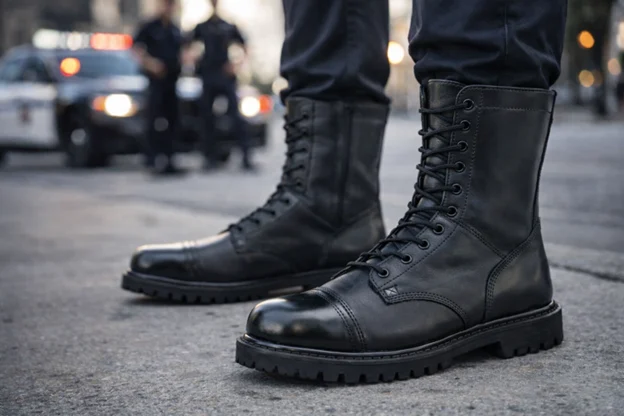
Law enforcement and security professionals need footwear that can handle long periods of standing, vehicle duty, foot patrol, stairs, outdoor calls, and sudden movement. The right police boots should support mobility, provide dependable traction, meet uniform requirements, and remain comfortable through changing work conditions.
Duty footwear should not be selected by appearance alone. A boot that looks suitable with a uniform may feel too heavy during foot patrol or offer too little grip on wet pavement. The better choice depends on the assignment, climate, terrain, shift length, and level of protection required.
Reviewing these factors before buying can help officers and security personnel find boots that work with their daily responsibilities rather than against them.
Start with the Demands of the Assignment
Police and security roles can vary widely. An officer assigned mainly to vehicle patrol has different footwear needs from someone working outdoor events, building security, crowd management, or regular foot patrol.
Vehicle-based assignments may benefit from boots with flexible soles and a lower-profile heel that feels comfortable around pedals. Officers who walk for much of the shift may place more importance on cushioning, low weight, and breathability.
Outdoor assignments may require waterproofing, deeper tread, and stronger ankle support. Tactical or emergency-response roles may need reinforced construction and footwear that remains secure during rapid movement.
The best boot should reflect the work performed most often. Choosing for rare situations while ignoring everyday duties can lead to unnecessary weight or discomfort.
Balance Mobility with Ankle Support
Many duty boots have higher shafts than regular shoes because they are intended to support the ankle and provide added coverage. However, more height does not always mean better movement.
A boot should support the ankle without feeling rigid. Excessive stiffness may make running, crouching, climbing stairs, or entering vehicles uncomfortable. Too little support may leave the wearer feeling unstable on uneven ground.
Weight also affects mobility. Heavy boots can contribute to fatigue over a long shift, especially for officers who walk frequently. Lightweight tactical styles may feel faster and more flexible, while heavier designs may provide more structure and protection.
Heel hold is another important factor. The heel should remain secure during walking and quick direction changes. Excessive movement inside the boot can cause friction, blisters, and reduced stability.
Prepare for Weather and Changing Surfaces
Duty footwear often moves between indoor and outdoor environments. A shift may include polished floors, concrete, asphalt, grass, gravel, mud, and wet sidewalks.
The outsole should provide grip across the surfaces encountered most often. Slip-resistant tread is useful in public buildings, hospitals, parking lots, schools, and wet entryways. Deeper tread may be better for outdoor assignments and uneven ground.
Waterproof boots can help in rain, snow, wet grass, and standing water. However, waterproof construction may feel warmer, so breathability should also be considered.
In hot climates, lighter materials and moisture-managing linings may help keep feet more comfortable. In cold conditions, insulation can be useful, but it should not make the toe box too tight when worn with thicker socks.
No single boot performs perfectly in every climate. Buyers should prioritize the conditions they face most often.
Check Uniform and Workplace Requirements
Departments, agencies, and security employers may have specific footwear standards. These can include color, shaft height, polishable surfaces, safety ratings, or restrictions on visible logos.
Black leather or polishable synthetic uppers are common where a formal uniform appearance is required. Other roles may allow mixed-material tactical boots that place greater emphasis on flexibility and ventilation.
Some assignments may require composite, steel, or alloy toe protection. Others may prohibit metal components or require footwear with electrical hazard or slip-resistance ratings.
Checking employer guidelines before buying prevents the frustration of choosing comfortable boots that cannot be worn on duty.
Focus on Cushioning and Underfoot Support
Long hours on concrete and pavement can create foot and leg fatigue. Cushioning helps reduce repeated impact, while arch support can help the foot remain stable.
A supportive midsole should feel comfortable without being overly soft. Excessively soft cushioning may feel good at first but can reduce stability during fast movement.
Removable insoles are useful for officers who prefer aftermarket footbeds or need additional support. The boot should have enough internal space to accept a different insole without making the fit too tight.
The outsole, midsole, and insole should work together. Comfort depends on the full construction, not one padded layer.
Get the Fit Right Before Full-Shift Wear
Duty boots should feel secure around the heel and midfoot while leaving enough room for the toes. Toes should not press against the front or sides of the boot during walking or downhill movement.
Width is as important as length. A narrow boot can create pressure and numbness, while an overly wide boot may allow the foot to slide.
Try boots with the socks normally worn on duty. Thick work socks, compression socks, or winter socks can change the fit considerably.
Some leather boots require a short break-in period. Wear them for brief periods before relying on them for a full shift. Mild stiffness may improve, but sharp pressure or numbness usually indicates a sizing or width problem rather than a normal break-in issue.
Care for Duty Boots Regularly
Regular care can help police boots remain presentable and dependable. Remove dirt, dust, and road salt after use because these materials can wear down leather and stitching.
Wet boots should air-dry at room temperature. Direct heat from heaters, dryers, or strong sunlight can damage leather, adhesives, and linings.
Polishable boots should be cleaned and conditioned with products suited to the material. Follow the footwear maker’s instructions, since heavy oils or unsuitable cleaners may affect the finish.
Inspect the outsoles for worn tread, separation, and uneven wear. Check laces, zippers, stitching, eyelets, and heel structure as well. Duty boots should be replaced when grip, support, or structural condition is no longer dependable.
Final Thoughts
Police boots should support the real demands of patrol, security, and public safety work. Assignment type, terrain, weather, uniform standards, fit, traction, and weight all affect whether a pair will remain comfortable and dependable. Careful selection and regular maintenance can help duty footwear perform better through long shifts and changing conditions.
For men and women looking for police footwear, tactical boots, work boots, and other duty-ready styles, BootsPlusMore offers options for different assignments, climates, and comfort needs. Visit the website to find boots suited to your daily responsibilities.
