


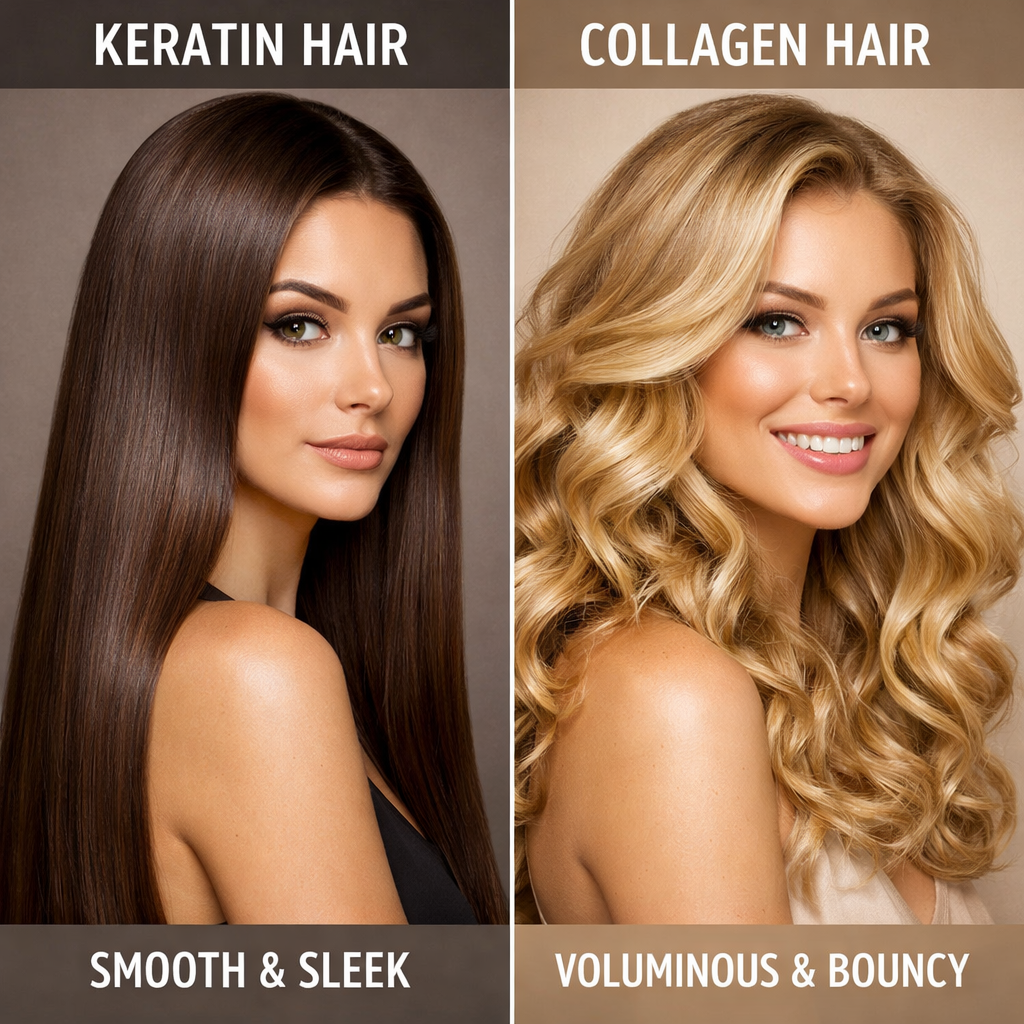
When it comes to improving hair health, two proteins often dominate the conversation—collagen and keratin. Both are essential for maintaining strong, resilient hair, but they work in very different ways. Understanding the difference between collagen vs keratin for hair is key to choosing the right approach for your hair care and wellness routine.
What Is Keratin and Why It Matters for Hair?
Keratin is the primary structural protein that makes up your hair strands. In fact, hair is composed largely of keratin, which gives it strength, elasticity, and protection against environmental damage.
Keratin works by:
- Strengthening the hair shaft
- Reducing breakage and split ends
- Smoothing the cuticle for shinier hair
- Protecting against heat and chemical damage
When keratin levels are depleted—due to heat styling, coloring, or environmental stress—hair can become brittle, frizzy, and prone to damage.
What Is Collagen and How Does It Help Hair?
Collagen is a structural protein found throughout the body, supporting skin, joints, and connective tissues. While it is not a direct component of hair strands, it plays a critical role in supporting hair growth and scalp health.
Collagen benefits hair by:
- Providing amino acids needed to produce keratin
- Supporting the health of hair follicles
- Promoting scalp hydration and elasticity
- Acting as an antioxidant to protect follicles from damage
In simple terms, collagen works from the inside out, creating a healthier environment for hair to grow.
Collagen vs Keratin for Hair: Key Differences
Although both proteins contribute to hair health, their functions are distinct:
- Keratin: Directly strengthens and repairs the hair strand
- Collagen: Supports hair growth by nourishing the scalp and follicles
- Keratin: Works primarily on the outer structure of hair
- Collagen: Works internally to improve overall hair quality
Keratin acts as the “building material,” while collagen provides the “support system” that helps maintain healthy hair growth.
Which Is Better for Hair Strength and Repair?
If your main concern is damaged, brittle, or frizzy hair, keratin is typically the more immediate solution. It directly reinforces the hair shaft, helping reduce breakage and improve texture.
Keratin treatments—whether in-salon or through haircare products—are especially effective for:
- Chemically treated hair
- Heat-damaged hair
- Frizzy or unmanageable hair
However, these solutions are often temporary and focus on improving the appearance and strength of existing hair.
Which Is Better for Hair Growth and Thickness?
Collagen is more beneficial when your goal is to support long-term hair growth and thickness. By providing essential amino acids like proline and glycine, collagen helps the body produce keratin naturally.
It also supports scalp health, which is a critical factor in maintaining strong and healthy hair follicles.
For individuals experiencing thinning hair or age-related changes, collagen can play a supportive role in maintaining hair density over time.
Can You Use Both Together?
Yes, collagen and keratin are not mutually exclusive—they actually complement each other. Many experts suggest that combining internal support (collagen) with external treatments (keratin) can provide the most comprehensive results.
For example:
- Collagen supports follicle health and growth
- Keratin strengthens and protects the hair shaft
This combined approach addresses both the root cause and the visible condition of your hair.
Factors to Consider When Choosing
When deciding between collagen and keratin, consider your specific hair goals:
- For repair and smoothness: Keratin is more effective
- For growth and long-term health: Collagen is more beneficial
- For overall hair wellness: A combination of both may be ideal
It’s also important to consider lifestyle factors such as diet, stress, and hair care habits, as these can significantly impact hair health.
Common Misconceptions
One common misconception is that collagen directly becomes hair. In reality, collagen provides the building blocks your body uses to produce keratin, rather than replacing it directly.
Another misconception is that keratin treatments alone can improve hair health long-term. While they improve appearance and strength, they do not address underlying nutritional or biological factors.
Final Thoughts
Understanding the difference between collagen and keratin is essential for building an effective hair care routine. While keratin strengthens and protects the hair externally, collagen supports the internal processes that promote growth and resilience. Together, they offer a balanced approach to achieving healthier, stronger hair.
For those seeking high-quality supplements designed to support hair, skin, and overall wellness, BioOptimal Supplements provides trusted options backed by quality and transparency.
