


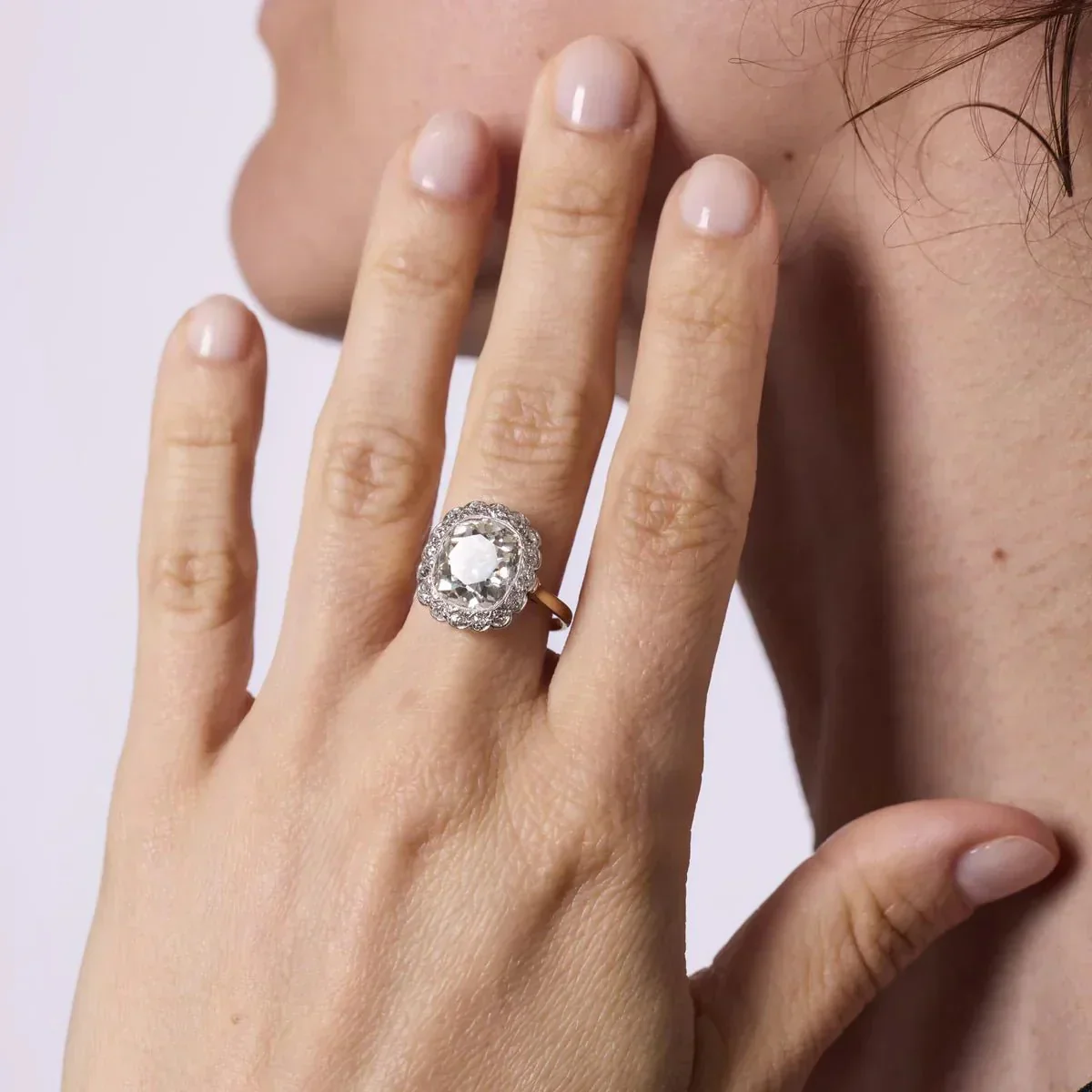
The engagement ring market has never offered more options, yet one category consistently draws buyers away from contemporary choices: Art Deco engagement rings. Defined by geometric precision, exceptional stonework, and a standard of handcraftsmanship rarely encountered in modern jewelry production, these pieces represent one of the most compelling selections a couple can make when choosing a ring meant to be worn every day for a lifetime. Their enduring appeal is not simply a matter of aesthetic taste — it reflects a broader shift in how today’s buyers think about individuality, quality, and the meaning behind a truly significant piece of jewelry.
What Sets Art Deco Engagement Rings Apart
Produced primarily between the 1920s and early 1940s, Art Deco jewelry emerged from a cultural moment defined by modernism, optimism, and a decisive departure from ornate Victorian convention. In engagement ring design, that translated into pieces that were bold without being heavy, intricate without being fussy, and immediately recognizable for their structural clarity and visual intention.
The defining signature of the period — angular geometry, symmetrical composition, and deliberate contrast between stones and metal — produces rings that read as simultaneously timeless and distinctive. Unlike contemporary designs that follow trend cycles, Art Deco pieces were built around design principles with lasting validity. A well-preserved example from 1928 does not look dated; it looks considered.
The Most Recognized Art Deco Engagement Ring Configurations
Within the broader Art Deco category, several ring styles appear consistently and remain particularly sought after by engagement ring shoppers:
The Filigree Solitaire — A single stone, most often an old European cut diamond, set within a platinum mounting of fine open filigree. Technically demanding to produce and deeply elegant in result, these pieces represent the period’s craftsmanship at its most refined.
The Geometric Halo — A center diamond enclosed within a frame of smaller stones arranged in an octagonal, hexagonal, or square shape rather than the rounded halos common in contemporary jewelry. The effect is architectural and precise — a distinctly Art Deco alternative to modern halo designs.
The Three-Stone or Five-Stone Linear Setting — Baguette-cut diamonds flanking a central stone in a clean horizontal arrangement is one of the most recognizable Art Deco configurations. Step-cut stones in orderly linear sequence embody the period’s commitment to geometric clarity.
The Hand-Engraved Shank — Bands featuring hand-engraved scrollwork, floral detailing, or geometric patterns add considerable visual complexity to even relatively simple stone settings and remain one of the most reliable indicators of authentic period workmanship.
Why Modern Couples Are Drawn to Art Deco Rings
The decision to choose a vintage engagement ring over a new one is rarely arbitrary. For many buyers, it reflects priorities that contemporary jewelry is simply not positioned to meet.
Individuality is a primary driver. No two Art Deco engagement rings are identical — each was produced through largely handcrafted processes that introduced natural variation into every piece. A couple choosing a genuine Art Deco ring is choosing something that no one else will have, in a market where most new engagement rings are manufactured in identical quantities.
The standard of construction is another compelling argument. Art Deco rings were produced when platinum work and stone setting were skilled trades executed by trained craftspeople. The precision of period milgrain, the quality of hand-engraving, and the structural integrity of properly made platinum mounts compare favorably with all but the highest tier of contemporary jewelry production.
Sustainability resonates as well. Selecting an estate engagement ring carries no new mining footprint and no manufacturing impact — a consideration that matters increasingly to a growing segment of today’s couples.
Understanding the Stones
The center stone in an Art Deco engagement ring is most commonly an old European cut diamond — a cutting style predating modern computer-assisted precision that produces a warmer, more romantic light return than the contemporary brilliant cut. For buyers accustomed to the high-contrast sparkle of a modern diamond, the old European cut offers something genuinely different: a softer, more candlelit glow that performs beautifully across a range of settings and lighting conditions.
Colored stones appear frequently in Art Deco engagement rings as well. Sapphires, rubies, and emeralds served as both center stones and accent elements. Calibré-cut colored gemstones arranged in precise geometric borders are particularly characteristic of the period and produce a richness of color that few contemporary engagement ring designs attempt.
Practical Considerations Before Purchasing
Any Art Deco engagement ring intended for daily wear should be carefully assessed for structural integrity before purchase. Examine the mounting for worn prongs, thinning metal at the shank, or any stone that shows movement within its setting. A jeweler experienced in estate pieces can evaluate condition and perform any necessary reinforcement without compromising the ring’s period character.
Resizing platinum Art Deco rings is frequently possible, though shanks featuring engraving or bead-set stonework require a specialist to alter correctly. Clarify what adjustment is feasible before committing, and account for this in your overall decision.
The Ring That Outlasts Every Trend
Art Deco engagement rings occupy a position that few jewelry categories can claim: historically significant and genuinely wearable, admired across every era, and increasingly difficult to source in fine, well-preserved condition. For couples who want a proposal ring with authentic character and lasting distinction, few choices compare.
Gesner Estate Jewelry offers an expertly curated collection of authenticated antique and vintage engagement rings, including rare Art Deco examples sourced from significant private estates. Visit their website to explore pieces that bring a century of extraordinary craftsmanship to one of life’s most meaningful moments.
