


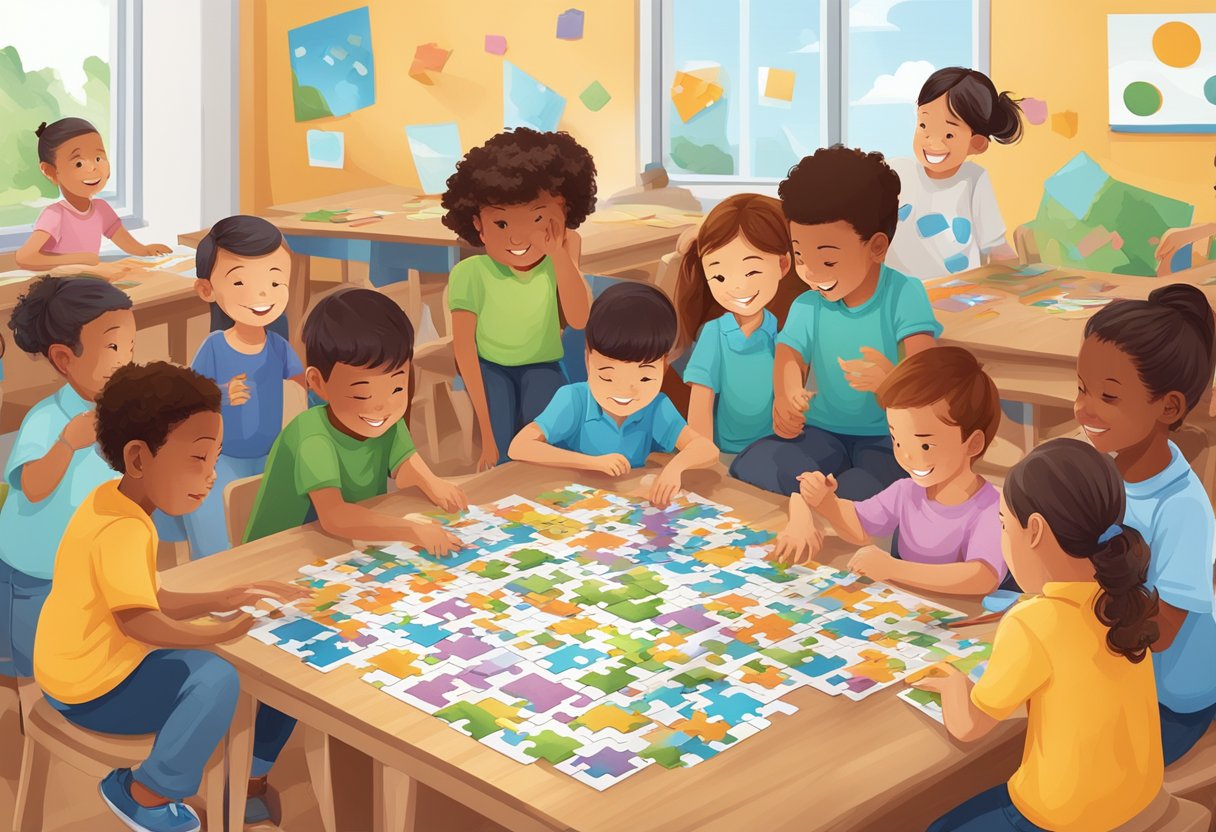
Learning becomes more enjoyable when students can participate in activities that challenge their minds and encourage teamwork. Word puzzles are a simple and effective way to bring excitement into classrooms, study groups, and educational gatherings. They allow learners to explore vocabulary, practice spelling, recognize patterns, and develop problem-solving skills while having fun with their classmates.
Teachers can introduce word puzzle games to make lessons more interactive and give students opportunities to learn from one another. Whether students work individually, compete in small teams, or solve challenges as an entire class, these activities can support language development and create a positive learning environment.
1. Classroom Word Search Challenge
A word search is an easy activity that students of different ages can enjoy. Teachers prepare a grid filled with letters and provide a list of hidden words related to a lesson. Students must locate the words horizontally, vertically, diagonally, or backward, depending on the difficulty level.
For example, a science lesson might include words such as energy, planet, water, and oxygen. An English lesson could focus on adjectives, verbs, or vocabulary from a recently studied story. Teachers can make the activity more engaging by allowing students to create their own puzzles for classmates to solve.
This game encourages visual attention, word recognition, and familiarity with subject-specific vocabulary. It can also serve as a short warm-up before introducing a new topic.
2. Team-Based Word Scramble Competition
Word scrambles challenge students to rearrange mixed-up letters to discover the correct words. Teachers can write scrambled words on a board, distribute printed worksheets, or display challenges on a classroom screen.
Divide the class into small groups and give each team the same set of scrambled words. Students discuss possible answers and write down their solutions within a set time. For example, the scrambled letters in “LPAEP” can be rearranged to form “APPLE.”
To connect the activity with academic lessons, teachers can choose words from mathematics, history, geography, or literature. Awarding points for correct answers can add excitement, while offering bonus points for defining a word encourages deeper understanding.
3. Guess the Word With Clues
Clue-based puzzles encourage students to think carefully about meanings, descriptions, and relationships between words. One student or teacher provides a series of hints while the rest of the class attempts to identify the mystery word.
For example, a teacher might say, “I have pages, a cover, and stories, and you can read me.” Students then guess the word “book.” As learners become more confident, teachers can introduce clues that require more reasoning.
This activity works well for vocabulary revision, reading comprehension, and language-learning sessions. It also gives students opportunities to explain their thinking and learn how descriptive language can communicate meaning.
4. Classroom Crossword Puzzle Activities
Crossword puzzles combine vocabulary knowledge with logical thinking. Students read clues and fill the correct words into a grid, making sure that intersecting letters match.
Teachers can design crosswords around spelling lessons, historical events, scientific concepts, or literature. For younger learners, simple clues and short words are appropriate. Older students can work with more detailed definitions and subject-specific terminology.
Crosswords can also become collaborative projects. Each group creates a puzzle based on a lesson and exchanges it with another group. Students must then solve the puzzle created by their classmates, giving everyone a chance to practice both teaching and learning.
5. The Last-Letter Word Chain
The last-letter word chain is a flexible activity that requires little preparation. The first player says a word, and the next player must provide a new word beginning with the final letter of the previous word.
For example, a chain might begin with “apple,” continue with “elephant,” and then move to “tiger.” The game continues until a player cannot think of a suitable word or repeats an answer that has already been used.
Teachers can introduce categories to increase the challenge. Students might use only animals, foods, places, or words connected to a particular subject. This activity supports quick thinking, vocabulary recall, listening, and participation in group settings.
6. Mystery Word Board Game
A mystery word game turns vocabulary practice into a shared classroom challenge. The teacher selects a secret word and writes blank spaces on the board to represent its letters. Students suggest letters or ask questions to uncover the answer.
For example, a five-letter mystery word might be associated with school supplies, animals, or a recent reading assignment. The teacher can provide hints about the word’s meaning or category whenever students need additional support.
To encourage wider participation, students can take turns choosing the secret words and leading the game. Teachers should use a friendly scoring system that rewards participation and reasoning rather than focusing exclusively on speed.
7. Group Story-Building With Random Words
Creative writing becomes more interesting when students must incorporate unexpected words into a shared story. To begin, the teacher prepares a collection of unrelated words, such as “castle,” “river,” “whisper,” and “lantern.”
Each group selects several words and creates a short story that includes every selected word. Students can divide responsibilities by assigning one person to suggest characters, another to develop the setting, and others to contribute events or write sentences.
Once the stories are complete, groups can read them aloud to the class. This activity connects vocabulary practice with imagination, communication, writing, and teamwork. It also helps students understand how individual words can contribute to a larger narrative.
8. Word Association Circle
Word association encourages students to make connections between ideas. One student says a word, and the next person responds with a related word. For example, “ocean” might lead to “waves,” followed by “surfing,” “beach,” and “sand.”
Teachers can establish a specific theme to keep the activity connected to the curriculum. A lesson about the environment might focus on words related to recycling, forests, wildlife, and conservation.
After several rounds, students can explain why they chose particular words. These explanations help teachers identify connections students understand and concepts that may need additional discussion.
9. Vocabulary Relay Race
A vocabulary relay combines movement with word-based learning. Divide students into teams and prepare a board or sheet of paper for each group. Give everyone the same category or prompt, such as words beginning with a particular letter or vocabulary related to a lesson.
One student from each team writes an appropriate word before passing the task to the next teammate. The activity continues until the allotted time ends or teams complete the required list.
Teachers should establish clear rules, provide enough space for movement, and offer an alternative seated version when necessary. The emphasis should remain on accurate answers, collaboration, and enjoyment rather than physical speed alone.
10. Build a Word From Letter Tiles
Letter tiles, paper squares, or reusable cards can turn spelling practice into a hands-on puzzle. Give each group a collection of letters and ask students to form as many valid words as possible.
Teachers can assign a target word and challenge students to find smaller words within it. For example, the letters in “TEACHER” can be used to form words such as “teach,” “each,” and “care,” provided the available letters are used correctly.
The activity can be adjusted for different learning levels by changing the number of letters, introducing minimum word lengths, or requiring students to explain the meanings of their answers.
11. Digital Word Puzzle Challenges
Technology provides additional ways to organize classroom puzzle activities. Students can use interactive whiteboards, classroom computers, tablets, or suitable educational websites to solve word searches, crosswords, anagrams, and vocabulary challenges.
Digital activities can be especially useful when teachers want students to work independently or complete short revision exercises. Some tools provide immediate feedback, allowing learners to identify mistakes and try again.
Teachers should select age-appropriate platforms, consider accessibility needs, and follow school policies regarding student privacy and device use. Digital puzzles can complement traditional classroom activities without replacing discussion, handwriting practice, or face-to-face collaboration.
12. Create a Classroom Puzzle Tournament
A classroom puzzle tournament brings several activities together into one organized event. Teachers can prepare different stations, with each station featuring a challenge such as a crossword, a word scramble, a mystery word, or a vocabulary matching game.
Students rotate between stations in small teams. Each completed challenge earns points, badges, or progress markers. To make the tournament educational, teachers can ask students to explain difficult answers and record unfamiliar words in their notebooks.
A tournament does not need expensive materials or complicated rules. Paper, pencils, a board, and a collection of prepared puzzles are often enough to create an engaging learning experience.
Benefits of Word Puzzle Games for Classroom Learning
Word puzzles offer several opportunities to reinforce classroom learning when they are matched to students’ ages, abilities, and educational goals.
Vocabulary Development
Puzzles introduce learners to unfamiliar words and encourage them to recall terms they have already studied. Activities involving definitions, clues, and word associations can help students connect vocabulary with meaning and context.
Spelling and Language Practice
Scrambles, crosswords, and letter-tile activities encourage students to pay attention to spelling patterns and letter combinations. Regular practice can also help learners notice similarities between words and recognize common spelling structures.
Critical Thinking and Problem-Solving
Many puzzles require students to test possibilities, eliminate incorrect answers, recognize patterns, and reconsider their assumptions. These processes provide opportunities to practice reasoning in an enjoyable setting.
Teamwork and Communication
Group challenges encourage students to share ideas, explain their reasoning, listen to different perspectives, and reach decisions together. Teachers can strengthen these benefits by ensuring that every student has a meaningful role.
Confidence and Participation
Some students feel more comfortable contributing to a short game than answering a question in a formal lesson. Small-group activities and adjustable difficulty levels can create additional opportunities for learners to participate and experience progress.
Tips for Organizing Successful Group Puzzle Activities
Teachers can make classroom puzzles more effective by planning activities around clear learning objectives. Before choosing a game, consider whether the goal is to reinforce spelling, introduce vocabulary, improve reading comprehension, or encourage cooperation.
It is also helpful to match the difficulty level to the class. Younger learners may benefit from picture clues and shorter words, while older students may enjoy complex crosswords, timed challenges, and puzzles based on subject-specific terminology.
Clear instructions are essential. Explain the rules, demonstrate an example, and give students enough time to understand the task before starting. For group activities, rotate responsibilities so that quieter students have opportunities to contribute.
Finally, review the answers after each game. Discussing unfamiliar words, explaining difficult clues, and correcting mistakes can turn an entertaining activity into a valuable learning experience.
Conclusion
Classroom puzzles can transform ordinary lessons into interactive experiences that encourage curiosity, creativity, and cooperation. From word searches and crosswords to vocabulary relays and collaborative storytelling, teachers have many options for making language practice more enjoyable.
By incorporating word puzzle games into classroom routines, educators can provide students with engaging opportunities to practice spelling, expand vocabulary, develop reasoning skills, and communicate with their peers. With thoughtful planning, inclusive rules, and activities suited to different learning levels, these games can become a useful part of both everyday lessons and special group-learning events.
