


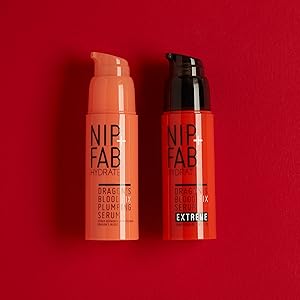
For most women dealing with acne, clearing the active breakout is only half the battle. What remains after the inflammation resolves — the dark marks, uneven texture, residual redness, and in some cases shallow scarring — can persist for months and in some cases years without targeted intervention. This post-acne skin landscape is where conventional acne treatments have their most significant gap: products designed to clear breakouts are rarely formulated to repair the damage they leave behind. Dragon blood acne recovery addresses this gap directly. The same Croton lechleri resin that interrupts the inflammatory cascade driving active breakouts contains compounds that accelerate tissue repair, support cellular renewal, and limit the pigmentary consequences that make post-acne skin as distressing as the breakouts themselves. Understanding dragon blood acne recovery in full — what it addresses, how it works, and how to use it effectively — gives women a more complete toolkit for managing acne’s full impact on skin health.
The Post-Acne Skin Problem Nobody Talks About Enough
Acne treatment conversations focus overwhelmingly on clearing active breakouts — reducing bacteria, normalizing sebum production, unclogging pores. These are legitimate priorities, but they address only the acute phase of a condition whose consequences extend well beyond the active lesion.
When an inflammatory acne lesion resolves, it leaves behind a wound site — one that the skin must repair through the same biological processes it uses to heal any tissue damage. The quality and speed of that repair determines whether the skin returns to its pre-breakout condition or carries visible evidence of the breakout forward in the form of:
Post-inflammatory hyperpigmentation (PIH). The dark marks — ranging from pink to red to deep brown depending on skin tone — that result from melanin overproduction triggered by the inflammatory response. PIH is not scarring in the structural sense, but it can take three to twenty-four months to fade without intervention, and sun exposure during the fading period can deepen and extend it significantly.
Post-inflammatory erythema (PIE). The pink or red discoloration that reflects dilated capillaries and residual vascular inflammation at the former breakout site. More common in lighter skin tones, PIE can persist for months after the active lesion has resolved.
Textural irregularity. Shallow depressions or roughness at former breakout sites reflect incomplete or disorganized tissue repair — the skin’s attempt to fill the wound left by the inflammatory process without the structural scaffolding needed for smooth, even healing.
Barrier compromise. Repeated inflammatory cycles — particularly in women experiencing chronic hormonal acne — progressively weaken the skin barrier, increasing baseline sensitivity and creating a skin environment that is simultaneously prone to breakouts and reactive to the treatments designed to prevent them.
These are the consequences that most acne treatments are not designed to address — and that dragon blood’s specific mechanisms are particularly well-suited to resolve.
How Dragon Blood Addresses Post-Acne Skin at the Biological Level
Accelerating tissue repair through fibroblast stimulation.
Taspine, the dominant alkaloid in Croton lechleri resin, has been shown in peer-reviewed research to stimulate fibroblast migration — the process by which connective tissue cells move to the site of skin damage and begin producing the collagen and extracellular matrix components needed for repair. In the context of post-acne recovery, this mechanism directly addresses the textural irregularity and shallow depression that result from inflammatory tissue damage — supporting the organized collagen deposition that smooth, even healing requires.
The practical outcome of consistent taspine application to post-acne sites is faster, more organized tissue repair — reducing the window during which the skin surface shows visible evidence of former breakouts and improving the quality of the healed tissue relative to untreated recovery.
Limiting post-inflammatory hyperpigmentation through early inflammation control.
PIH develops because the inflammatory response that drives an acne lesion also stimulates melanocytes — the pigment-producing cells — to overproduce melanin as a protective response to perceived skin trauma. The more intense and prolonged the inflammatory response, the greater the melanin overproduction and the darker and more persistent the resulting mark.
Dragon blood’s anti-inflammatory compounds — alkaloids and proanthocyanidins that modulate the inflammatory cascade at a cellular level — reduce the intensity and duration of the inflammatory response both during the active breakout and in the immediate post-resolution phase. By limiting inflammation at both stages, dragon blood reduces the melanin stimulus that drives PIH formation, addressing the discoloration problem at its source rather than attempting to fade pigment after it has already deposited.
Supporting cellular renewal to accelerate surface clearance.
Even with reduced melanin production, some degree of post-inflammatory discoloration is typical following inflammatory acne. The rate at which this discoloration fades is determined largely by cellular turnover — the speed at which pigmented surface cells are replaced by fresh ones from below. Dragon blood’s cellular renewal support — driven by fibroblast activity and the regenerative compounds in the resin — accelerates this turnover, bringing unpigmented cells to the surface more rapidly and shortening the visible fading timeline for existing PIH.
Rebuilding barrier integrity in chronically breakout-prone skin.
For women experiencing recurring hormonal acne, the cumulative barrier compromise of repeated inflammatory cycles creates a skin environment that perpetuates the breakout cycle — compromised barrier allows irritants in, triggers inflammatory response, drives breakout, further compromises barrier. Dimethylcedrusine’s film-forming and barrier-reinforcing properties interrupt this cycle by progressively rebuilding the barrier function that inflammation has degraded, reducing the baseline vulnerability that makes chronically acne-prone skin so difficult to stabilize.
A Post-Acne Recovery Protocol Using Dragon Blood
Effective post-acne recovery requires applying dragon blood’s mechanisms at the right stages of the breakout and healing cycle:
During the active breakout phase. Apply dragon blood serum or treatment to the active lesion site in addition to any primary acne treatment being used. The anti-inflammatory properties reduce lesion severity and duration; the antimicrobial phenolic compounds address bacterial contribution without disrupting surrounding skin. This limits the inflammatory intensity that drives PIH formation before the lesion resolves.
Immediately post-resolution. Once the active lesion has cleared, continue dragon blood application to the former breakout site daily. This is the critical window for PIH prevention — the melanin stimulus is still active in the days immediately following resolution, and consistent anti-inflammatory application during this period meaningfully reduces the depth and persistence of any resulting discoloration.
During the fading phase. For existing PIH and PIE, daily dragon blood application supports the cellular renewal that brings unpigmented surface cells forward. Pairing dragon blood with niacinamide — which inhibits melanin transfer from melanocytes to surrounding skin cells — creates a complementary approach that addresses both the renewal rate and the pigment transfer mechanism simultaneously.
As ongoing barrier maintenance. Between breakout cycles, daily dragon blood application as part of a routine focused on barrier support and inflammation reduction gradually shifts the skin’s baseline condition — reducing the reactivity and vulnerability that make chronically acne-prone skin so susceptible to both breakouts and post-breakout damage.
Sun Protection as a Non-Negotiable in Post-Acne Recovery
No post-acne recovery protocol is complete without consistent, daily SPF application — and this bears emphasis because it is the step most commonly skipped or deprioritized. UV exposure during the PIH fading period stimulates additional melanin production at the already-sensitized former breakout site, deepening discoloration that would otherwise fade and extending the recovery timeline significantly.
Dragon blood’s antioxidant compounds provide a degree of environmental protection, but they are not a substitute for dedicated photoprotection. SPF 30 minimum, applied every morning as the final skincare step before makeup, is the single most impactful addition to any post-acne recovery protocol — and the one most directly within the user’s control.
Clearing Breakouts Is the Beginning, Not the End
Acne treatment that stops at clearing active lesions addresses half the problem at best. The skin that breakouts leave behind — marked, uneven, barrier-compromised, and vulnerable to the next inflammatory cycle — requires its own targeted approach. Dragon blood’s combination of tissue repair, inflammation control, cellular renewal support, and barrier reinforcement makes it one of the most comprehensively suited ingredients available for this specific challenge.
For women whose post-acne skin has been the harder problem to solve, that comprehensiveness is worth taking seriously.
Start Your Post-Acne Recovery Today
Breakouts end. Their consequences don’t have to linger. Essance Skincare has developed a dragon blood collection formulated to address acne’s full impact — from active inflammation through post-breakout recovery — with the ingredient integrity and clinical grounding to deliver visible, lasting results. Explore the full range and give your skin the recovery it deserves.
