


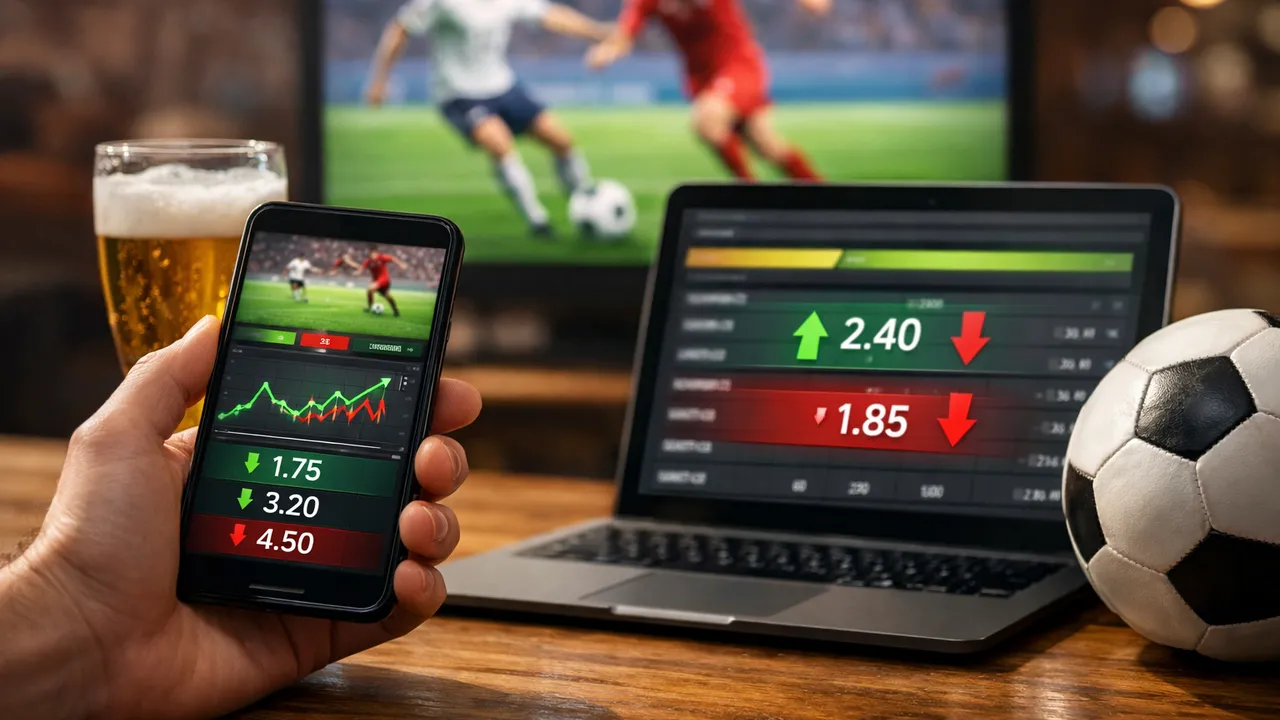
Sports betting has changed significantly with the growth of smartphones, high-speed internet, real-time data, and mobile applications. Instead of placing a wager before a match begins, users can now access markets while a football match, cricket game, tennis match, or other sporting event is taking place.
This development has made in-play betting, also known as live or in-running betting, an important part of the modern sports-betting environment. Mobile technology has played a particularly important role because smartphones allow users to access betting platforms from many locations without needing a desktop computer.
The Rise of Mobile Sports Betting
The widespread adoption of smartphones has transformed how people interact with online services, including sports-betting platforms. Mobile devices combine internet access, payment functionality, notifications, location services, and increasingly sophisticated applications in one portable device.
Research from the UK Gambling Commission has previously found that mobile phones were used by a substantial majority of surveyed in-play bettors, illustrating the strong relationship between mobile technology and live betting.
Mobile applications also reduce the practical barriers associated with accessing betting markets. Users can view fixtures, odds, statistics, account information, and other features through a single interface.
What Is In-Play Sports Betting?
In-play betting refers to wagers placed after a sporting event has already started. For example, a person may place a wager on the next goal during a football match or on the next set winner during a tennis match.
Unlike pre-match betting, in-play markets can change continuously. A goal, injury, red card, wicket, timeout, or other significant event can cause available prices to change rapidly.
The UK Gambling Commission describes in-play betting as wagering while an event is taking place and notes that operators rely on real-time information to adjust prices, suspend markets, and settle wagers accurately.
Why Mobile Devices Are Important
Mobile devices are particularly suited to in-play betting because they provide immediate access to information. A smartphone can display live scores, statistics, market changes, match information, and other data while an event is underway.
The convenience is also significant. Users do not have to remain at a desktop computer to follow a market. Mobile applications can send notifications and provide interfaces specifically designed for smaller screens.
However, convenience also creates an important consideration: easier access can make it easier to make decisions quickly. Research examining smartphone sports betting has found associations between features such as betting anywhere and anytime, privacy, promotional access, and short-term betting harm.
Real-Time Data Is Driving In-Play Markets
Behind every modern in-play market is a large amount of real-time information. Sports-data systems can collect information about scores, player actions, match situations, time remaining, and other relevant events.
Betting operators use these data feeds to update markets as the sporting situation changes. Because the process can occur within seconds, technology and data accuracy are central to the operation of live markets.
The speed of information also creates technical challenges. Television and online streams can have delays, while spectators inside a stadium may see an event before it reaches viewers through a broadcast. Regulators have identified latency and access to real-time information as important issues for in-play betting.
Faster Networks and Better Mobile Experiences
Improvements in mobile connectivity have supported the development of live sports applications. Faster networks can make it easier to load statistics, update odds, stream sporting content, and refresh betting interfaces.
Modern smartphones are also more powerful than earlier mobile devices. Developers can therefore create applications containing live dashboards, interactive statistics, personalized interfaces, account-management tools, and other features.
The result is an increasingly integrated experience in which watching a sporting event and viewing betting information can happen on the same device.
The Expansion of Live Betting Markets
In-play betting is no longer limited to a small number of simple markets. Depending on the sport and jurisdiction, platforms may offer markets connected to individual events, match outcomes, player performances, totals, handicaps, and other statistical developments.
This creates more opportunities for interaction throughout a match. Instead of having a single betting decision before the event, users may encounter changing markets throughout the competition.
The commercial importance of this development is significant. UK regulatory research has previously shown that in-play betting can account for a substantial share of sports-betting revenue in sports where live markets are available.
Cash-Out and Other Interactive Features
Mobile betting platforms have also introduced features designed to give users greater control over open wagers. Cash-out functionality, for example, can allow a user to settle a qualifying wager before the underlying sporting event has finished.
Other interactive features may include bet builders, live statistics, personalized notifications, and continuously updated markets.
These features can make the experience more dynamic, but they also mean users need to understand exactly how each feature works before using it. Terms, eligibility requirements, settlement rules, and availability can differ between operators and jurisdictions.
The Role of Artificial Intelligence and Automation
Artificial intelligence and automation are becoming increasingly relevant to sports-betting technology. Automated systems can process large volumes of sporting data and assist with pricing, market management, fraud detection, customer-support systems, and risk monitoring.
Machine-learning technologies can also help platforms identify unusual account activity or patterns that may require additional review.
The technology itself does not eliminate risk. Its value depends on how responsibly operators deploy it, how transparent their systems are, and what safeguards exist for users.
Regulation Is Becoming More Important
The growth of mobile and in-play betting has created new regulatory challenges. Because live betting happens quickly, regulators and operators must consider issues involving market integrity, accurate information, responsible gambling, age verification, advertising, and consumer protection.
Rules also differ considerably between jurisdictions. A feature that is permitted in one country may be restricted or prohibited elsewhere. For example, Australia’s communications regulator has taken enforcement action concerning how certain operators facilitated in-play betting under Australian rules.
For that reason, users should understand the laws applicable in their own location rather than assuming that an online service is legally available simply because it can be accessed through a smartphone.
Responsible Gambling and Mobile Betting
The convenience of mobile betting makes responsible gambling particularly important. Because a smartphone is usually available throughout the day, betting can become easier to access than traditional forms of wagering.
A responsible approach includes setting financial limits, deciding how much time to spend on gambling, avoiding chasing losses, and taking breaks. Users should also understand that sports knowledge and real-time information cannot guarantee a profitable outcome.
Research has found connections between frequent use of certain live sports-betting features and higher levels of gambling harm among higher-risk groups.
Promotional messages and betting features should therefore be approached carefully rather than treated as guarantees of success. For example, someone searching for สมัคร UFABET should first consider whether the service is legally available in their jurisdiction, review its terms, and understand any applicable responsible-gambling protections before using an online betting service.
Security and Account Protection
Mobile betting also raises cybersecurity considerations. Users should protect their accounts with strong, unique passwords and available security features such as multi-factor authentication or biometric verification.
It is equally important to use legitimate applications or websites and to avoid unknown links or unofficial downloads. Users should be cautious about sharing account credentials, payment information, or identification documents with unverified parties.
Operators also have responsibilities concerning data security, identity verification, financial transactions, and protection against unauthorized access.
The Future of Mobile and In-Play Betting
The development of mobile technology suggests that real-time sports interaction will continue evolving. Faster connectivity, improved data feeds, artificial intelligence, personalized interfaces, and more sophisticated statistical tools may further change how live sports markets are presented.
At the same time, regulation and responsible-gambling requirements are likely to remain central issues. The future of the industry will therefore depend not only on making betting faster and more convenient but also on improving transparency, consumer protection, security, and responsible-use tools.
Conclusion
The growth of mobile and in-play sports betting represents one of the most significant technological changes in the modern betting industry. Smartphones have made sports markets more accessible, while real-time data has enabled betting opportunities to change alongside live sporting events.
However, greater convenience also brings greater responsibility. Users need to understand the rules in their jurisdiction, evaluate the terms of any platform they consider using, protect their personal information, and establish clear financial and time limits.
As technology continues to develop, the balance between innovation, entertainment, regulation, and consumer protection will remain an important part of the future of mobile and in-play sports betting.
