


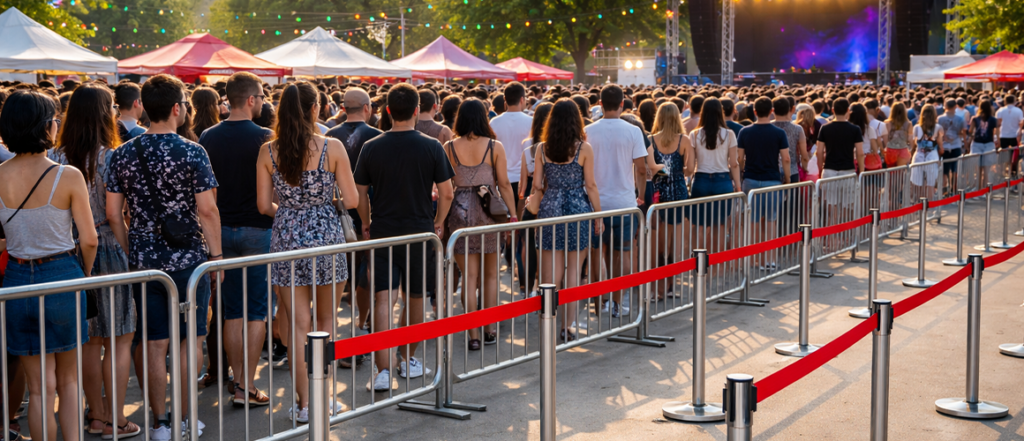
Events and public gatherings require clear boundaries when guests, staff, vendors, vehicles, and equipment share the same space. For planners who need temporary equipment without taking on storage and ownership, crowd control barriers rental can provide a practical way to organize entry points, guide pedestrian movement, manage queues, and protect restricted areas.
Rental barriers are useful because event layouts rarely stay the same. A venue may host a small corporate function one week and a large ticketed event the next. A municipal agency may need barriers for a parade, public ceremony, road closure, or seasonal festival. Renting allows each team to select equipment based on the current event rather than working around a fixed inventory.
When planned properly, temporary barriers help guests understand where to go while giving security and operations teams more control over the site.
Why Renting Barriers Can Be Practical
Buying crowd control equipment may make sense for venues and agencies that use it regularly. However, many organizations only need barriers for occasional events, short-term projects, or seasonal schedules.
Rental removes the need for long-term storage. Metal barriers, stanchions, fencing, and other crowd management products can take up considerable space when they are not in use. Smaller venues and event companies may not have enough room to store a large inventory.
Renting also allows teams to adjust quantities. A small event may require a few sections near registration, while a public festival may need barriers across entrances, stages, vendor rows, and pedestrian routes.
This flexibility can help planners avoid purchasing more equipment than they need while still having enough for larger events.
Where Rental Barriers Are Commonly Used
Crowd barriers are used across many public and private settings. Concerts and festivals may need them near entrances, ticket checkpoints, merchandise booths, food vendors, VIP sections, and performance areas.
Parades, charity walks, and races may use barriers along viewing zones, registration areas, starting points, finish lines, and street crossings. Municipal teams may also use them for public meetings, civic ceremonies, holiday events, and temporary road closures.
Venues may rent barriers for graduations, exhibitions, sporting events, conventions, and outdoor programs. Security companies may use them around screening points, loading areas, media zones, and staff entrances.
Because the equipment is temporary, it can be placed according to the site plan and removed once the event has ended.
How Barriers Improve Crowd Movement
Large groups can become difficult to manage when there is no visible structure. Guests may form uneven lines, block walkways, gather around entrances, or enter spaces intended for staff.
Barriers help turn an open area into a clear layout. They can form orderly queues, create separate entrance and exit lanes, guide guests toward ticketing or security, and mark places where access is limited.
This can reduce pressure on event staff. Instead of repeatedly directing every guest, teams can rely on the physical layout to communicate the intended path.
Barriers can also help separate pedestrians from vehicles, equipment, or active setup areas. This is especially useful at outdoor events, parking lots, loading zones, and street-based gatherings.
What to Plan Before Renting
The first step is reviewing the event map. Planners should identify where guests will enter, wait, move, gather, and leave. These areas usually require the most careful barrier placement.
Attendance estimates should reflect peak crowd levels. A location that feels open early in the day may become congested during headline performances, scheduled starts, or evening entry periods.
Surface conditions should also be considered. Barriers may be used on pavement, grass, gravel, indoor flooring, or temporary event surfaces. Outdoor teams should think about weather, visibility, lighting, and stable placement.
Emergency access must remain clear. Fire lanes, medical routes, law enforcement access, public exits, and staff pathways should be included in the plan before equipment arrives.
Delivery and pickup timing also matter. Barriers should arrive early enough for placement, inspection, and adjustments before attendees enter the site.
How Security and Operations Teams Benefit
Security teams depend on clear boundaries. Rental barriers can define public spaces, staff-only zones, backstage entrances, equipment areas, and controlled access points.
At security checkpoints, barriers can create clear lines and help prevent people from entering from the side. Around stages, vendor areas, and loading zones, they can help keep unauthorized visitors away from active operations.
Operations teams can also use barriers to organize vendor movement, deliveries, registration, and event breakdown. When each area has a visible purpose, staff members are less likely to give conflicting directions.
This visual structure helps guests, employees, volunteers, vendors, and security teams follow the same site plan.
Why Early Planning Matters
Crowd control should be reviewed before the final setup day. Late planning can lead to shortages, poor placement, blocked pathways, or equipment arriving too close to opening time.
Early planning gives organizers time to check quantities, barrier types, entrances, emergency routes, and delivery access. It also allows security and venue teams to review the layout together.
A well-planned setup can improve the guest experience. Visitors generally feel more comfortable when entry points are clear, lines are orderly, and restricted areas are easy to identify.
Final Thoughts
Rental barriers are a practical choice for events and temporary sites that need crowd guidance, queue management, restricted-area protection, or pedestrian routing. They give planners the flexibility to match equipment quantities and layouts to each event while avoiding long-term storage concerns.
For event planners, venues, municipal agencies, and security teams looking for temporary crowd management equipment, Epic Crowd Control offers rental options for concerts, festivals, parades, public gatherings, and changing site needs. Visit the website to plan a clearer and more organized event layout.
