


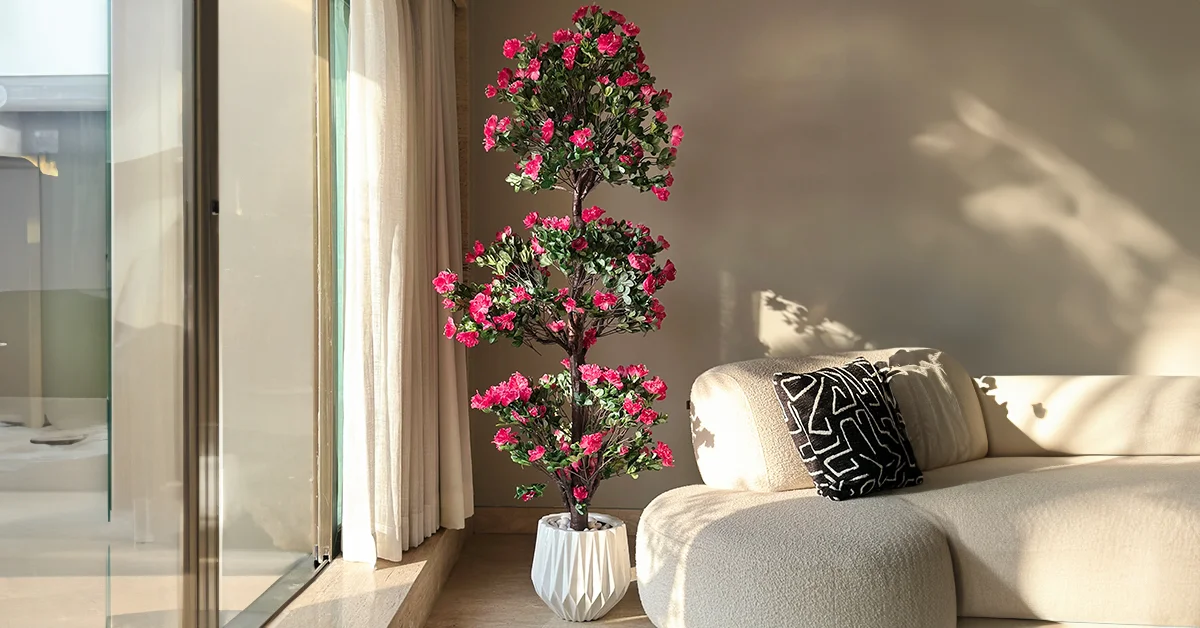
Your living room is one of the most-used spaces in your home. It’s where you relax after a long day, entertain guests, and spend time with family. Adding greenery is one of the easiest ways to make the space feel more welcoming, but keeping real plants alive isn’t always practical. A fake plant in living room décor offers the same fresh, natural look without the need for watering, sunlight, or ongoing maintenance. Whether your style is modern, rustic, minimalist, or traditional, artificial plants can instantly elevate your living room while staying beautiful all year long.
In this guide, we’ll explore creative living room decorating ideas using artificial plants, along with styling tips to help you achieve a polished and realistic look.
Why Choose Artificial Plants for Your Living Room?
Artificial plants have become increasingly realistic, making them a popular alternative to live houseplants. They provide lasting beauty without the challenges of plant care.
Some of the biggest benefits include:
- No watering or pruning required
- Stay green throughout every season
- Perfect for rooms with limited natural light
- Allergy-friendly alternative to live plants
- Safe option for frequent travelers
- Long-lasting and cost-effective
- Available in countless styles and sizes
Whether you want a single statement piece or several decorative accents, artificial plants make decorating simple.
1. Make a Statement with a Large Floor Plant
Large artificial trees instantly draw attention and fill empty corners that often feel unfinished.
Popular choices include:
- Faux Fiddle Leaf Fig
- Artificial Olive Tree
- Faux Bird of Paradise
- Artificial Monstera
- Faux Areca Palm
Place a tall plant beside a sofa, TV console, fireplace, or reading chair to add height and balance to the room.
Tip: Use decorative woven baskets or ceramic planters to give your artificial tree an upscale appearance.
2. Decorate Your Coffee Table
A coffee table doesn’t need elaborate décor to look stylish.
Instead, combine:
- Small artificial succulents
- Faux eucalyptus stems
- Mini potted plants
- Decorative books
- Candles
- Trays
Keeping arrangements simple prevents the table from looking cluttered while adding texture and color.
3. Style Open Shelves with Greenery
Artificial plants work beautifully on:
- Floating shelves
- Built-in bookcases
- Entertainment units
- Display cabinets
Mix greenery with books, framed photos, sculptures, and decorative objects for a layered designer look.
Small trailing plants can soften the straight lines of shelving.
4. Brighten Empty Corners
Every living room has awkward empty spaces that seem difficult to decorate.
A medium or large artificial plant can easily transform:
- Bare room corners
- Spaces beside furniture
- Hallway entrances
- Window edges
- Staircase landings
Choose plants with varying leaf shapes to create visual interest.
5. Add Greenery Around the Fireplace
The fireplace naturally becomes the focal point of many living rooms.
Artificial plants help soften the hard materials like brick, tile, or stone.
Try decorating with:
- Matching potted plants on each side
- Faux fern arrangements
- Olive branches in tall vases
- Small succulents on the mantel
Symmetry creates a clean and elegant appearance.
6. Mix Different Plant Heights
Professional interior designers rarely use plants of the same size.
Instead, combine:
- Tall floor plants
- Medium tabletop plants
- Small decorative succulents
- Hanging vines
The variation creates depth and keeps the room visually balanced.
7. Use Hanging Artificial Plants
If floor space is limited, think vertically.
Hanging artificial plants work well in:
- Macrame hangers
- Wall-mounted planters
- Floating shelves
- Ceiling hooks
Popular options include:
- Artificial ivy
- Faux pothos
- String of pearls
- Hanging eucalyptus
These add softness without taking up valuable floor space.
8. Create a Natural Centerpiece
A decorative centerpiece can instantly refresh your living room.
Fill a vase with:
- Faux eucalyptus stems
- Artificial magnolia branches
- Silk hydrangeas
- Faux greenery sprays
Place the arrangement on:
- Coffee tables
- Console tables
- Sideboards
Seasonal stems can easily be swapped throughout the year.
9. Pair Plants with Natural Materials
Artificial greenery looks more realistic when paired with organic textures.
Consider combining plants with:
- Wooden furniture
- Linen fabrics
- Jute rugs
- Rattan baskets
- Stone accessories
- Woven trays
Natural materials enhance the lifelike appearance of artificial plants.
10. Use Multiple Small Plants Instead of One Large Plant
Not every living room needs a dramatic tree.
Grouping several smaller plants creates an equally attractive display.
Arrange plants on:
- Side tables
- Window sills
- TV stands
- Console tables
- Shelving
Use odd-numbered groupings (three or five) for a balanced look.
Choosing the Right Artificial Plant for Your Living Room
When selecting artificial plants, consider:
Room Size
Large rooms can accommodate taller trees, while compact spaces benefit from smaller potted plants.
Decorating Style
- Modern: Monstera, Snake Plant
- Farmhouse: Olive Tree, Lavender
- Coastal: Palm Trees
- Minimalist: Simple Green Plants
- Traditional: Boxwood or Magnolia
Plant Color
Choose greenery that complements your existing décor rather than overpowering it.
Tips for Making Artificial Plants Look Real
Even high-quality artificial plants benefit from thoughtful styling.
Follow these simple tips:
- Fluff and shape branches after unpacking.
- Place plants where real plants would naturally grow.
- Use decorative pots with realistic filler like preserved moss or decorative stones.
- Mix artificial plants with natural materials.
- Dust leaves regularly to keep them looking fresh.
- Avoid placing every plant at the exact same height.
These small details make a significant difference in creating a convincing display.
Common Decorating Mistakes to Avoid
To achieve a polished look, avoid these common mistakes:
- Using too many artificial plants in one area
- Choosing plants that are too small for large rooms
- Leaving plants in plain plastic nursery pots
- Ignoring scale and proportion
- Forgetting to reshape leaves and branches
- Selecting unrealistic-looking artificial plants
Quality and placement matter more than quantity.
Frequently Asked Questions
Are artificial plants good for living rooms?
Yes. Artificial plants add color, texture, and warmth without requiring maintenance. They’re ideal for homes with limited sunlight, busy schedules, or allergy concerns.
Where should I place a fake plant in my living room?
Popular locations include empty corners, beside the sofa, next to the TV stand, near the fireplace, on bookshelves, coffee tables, console tables, and window areas.
Which artificial plant looks the most realistic?
Fiddle Leaf Fig, Olive Trees, Monstera, Areca Palms, and Snake Plants are among the most realistic-looking options when made from high-quality materials.
Can I mix artificial and real plants?
Absolutely. Combining real and artificial plants creates a natural, layered appearance while reducing maintenance.
How do I clean artificial plants?
Dust leaves regularly with a microfiber cloth, feather duster, or gentle air blower. Occasionally wipe the leaves with a damp cloth to maintain their appearance.
Final Thoughts
Decorating your living room with artificial plants is an easy way to create a fresh, inviting atmosphere without the upkeep of live greenery. Whether you prefer a striking faux tree in the corner, a collection of small potted plants on shelves, or elegant greenery on your coffee table, artificial plants can complement nearly every interior design style.
If you’re looking for premium-quality artificial greenery that combines realistic craftsmanship with long-lasting durability, explore the beautiful collection from Fake Flowers. From lifelike faux trees to stylish decorative plants, you’ll find options that make it easy to transform your living room into a warm, welcoming space.
