


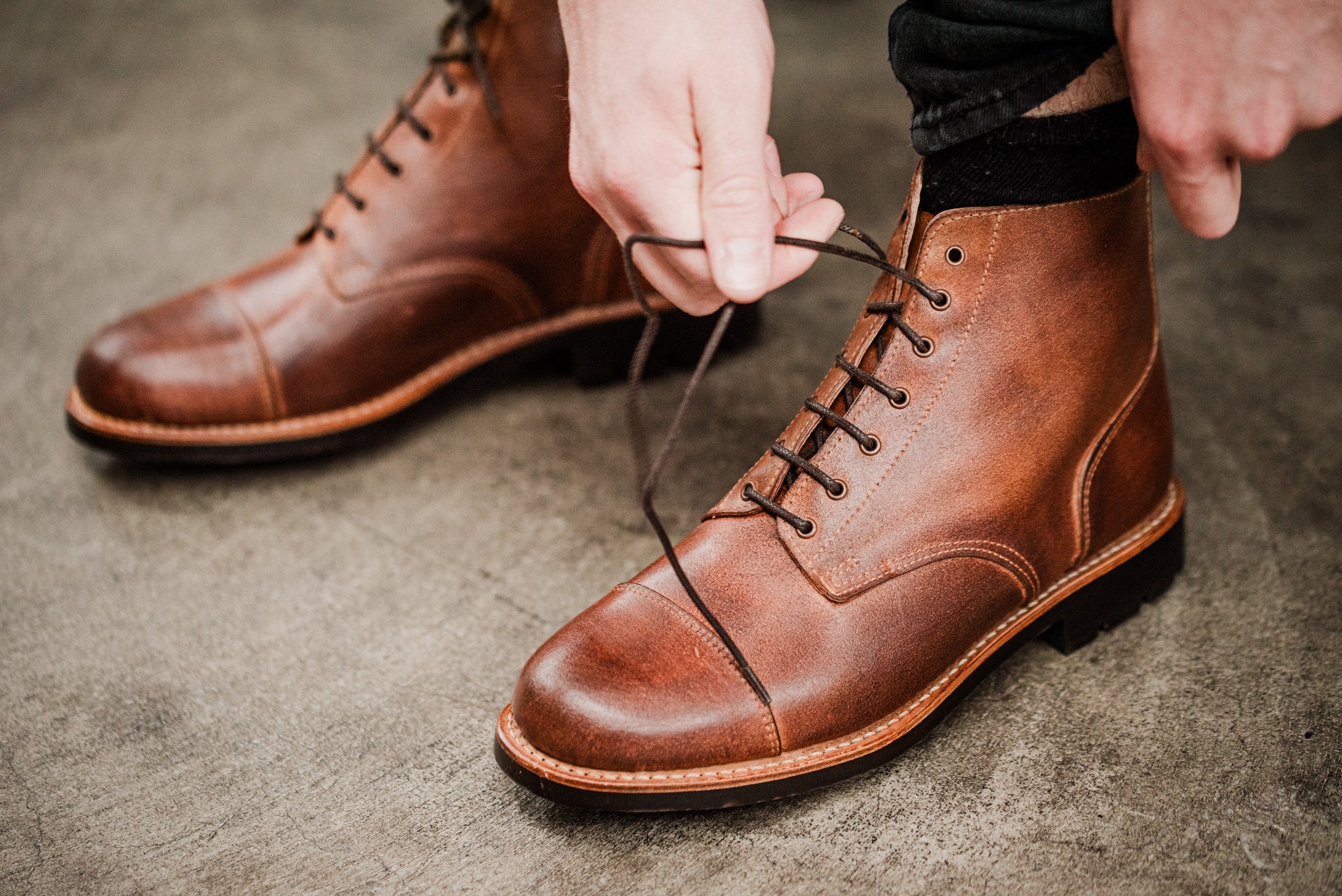
The difference between a pair of leather boots that becomes a wardrobe fixture worn for a decade and one that spends most of its life at the back of a closet frequently comes down to fit — and more specifically, to whether the owner knew how to address a fit problem that was solvable rather than permanent. Professional cobblers and footwear repair specialists understand something that most boot owners do not: the majority of leather fit complaints are not permanent characteristics of the boot but conditions that respond predictably to the right intervention applied correctly. Understanding how to stretch leather boots the way a professional approaches the problem — with an understanding of the material, the mechanism, and the method — produces results that casual approaches based on incomplete information consistently fail to deliver.
How Leather Responds to Stretching: The Material Science
Every effective leather stretching method works through the same fundamental mechanism — and understanding that mechanism is what allows a boot owner to select the right approach for a specific fit problem rather than defaulting to the most commonly suggested method regardless of whether it is appropriate.
Leather is a fibrous protein structure — collagen fibres organised in a three-dimensional network that gives the material its characteristic combination of strength, flexibility, and conformability. In its natural state, these fibres are held in a relatively fixed arrangement by the inter-fibre bonds that form during the tanning process. When the leather is conditioned with moisture and subjected to sustained mechanical pressure, those inter-fibre bonds relax, the fibrous network reorganises around the shape exerting pressure against it, and the new arrangement is retained when the moisture evaporates and the leather returns to its ambient condition.
This is the mechanism behind every effective stretching approach — from the gradual reshaping that occurs through normal break-in wear, to the accelerated results produced by stretching sprays and mechanical boot stretchers. Methods that apply moisture and pressure correctly produce permanent, proportional stretch results. Methods that bypass this mechanism — applying heat directly to dry leather, saturating the material with water rather than conditioning it — disrupt the fibrous structure rather than reorganising it, and produce damage rather than stretch.
Diagnosing the Fit Problem Before Selecting a Method
Professional cobblers begin every stretching assessment with a diagnosis — identifying specifically where the boot is tight, in which direction the stretch is needed, and how much stretch is required. This diagnostic step is what makes professional stretching results reliably better than self-directed attempts, and it is entirely replicable by a boot owner willing to approach the problem systematically.
Tightness across the ball of the foot — the widest point of the forefoot — is the most common leather boot fit complaint and the condition most responsive to width stretching through a mechanical boot stretcher. The ball of the foot creates a predictable pressure point against the interior of the boot that a width-expanding stretcher can address directly.
Tightness across the instep — the highest point of the arch — typically requires a combination of volume stretching and conditioning rather than simple width expansion. The instep sits against the vamp of the boot in a location that a standard width stretcher does not reach effectively. Conditioning the vamp area and wearing the boot with thick socks while the conditioner is active directs the stretch to the instep region more effectively than mechanical stretching alone.
Localised pressure points — a bunion, a prominent bone at the base of the little toe, or an unusually high first metatarsal — require spot stretching rather than overall width expansion. A boot stretcher equipped with spot stretching plugs applies concentrated pressure to the specific interior location corresponding to the pressure point, producing localised stretch without unnecessarily expanding the surrounding areas of the boot.
Calf tightness in a tall boot shaft requires a shaft stretcher — a different tool from a last-shaped foot stretcher — that expands the circumference of the shaft rather than the toe box and forefoot volume.
The Professional Method: Step by Step
The approach that professional cobblers apply to leather boot stretching follows a consistent sequence that prioritises material preparation before mechanical intervention.
The first step is cleaning and conditioning the leather before any stretching is attempted. Leather that is dry, stiff, or carrying a build-up of polish and surface product is less responsive to stretching than leather that has been cleaned to remove surface barriers and conditioned to restore the suppleness of the fibrous structure. A leather cleaner applied to the interior and exterior of the boot, followed by a quality leather conditioner worked thoroughly into the areas to be stretched, prepares the material to respond to subsequent mechanical intervention more effectively and with less risk of surface damage.
The second step is applying a leather stretching spray directly to the interior surface at the areas of tightness — the ball of the foot, the instep, the toe box, or any specific pressure points identified during the diagnosis. Stretching spray penetrates the leather fibres and temporarily increases their pliability beyond what conditioning alone achieves, creating a window of enhanced stretchability during which mechanical pressure produces more significant and more permanent results.
The third step is applying mechanical pressure through a boot stretcher while the stretching spray is still active. Insert the stretcher, expand it to the point of firm resistance — not to the point of forcing the leather beyond comfortable expansion — and leave it in place for a minimum of eight hours and ideally overnight. The sustained, even pressure of the stretcher during the period when the leather fibres are at their most pliable is what produces the permanent dimensional change that wear alone would require weeks to achieve.
The fourth step is allowing the boot to dry completely on the stretcher before removing it. Removing the stretcher while the leather is still moisture-active allows the fibres to partially contract back toward their original arrangement before they have fully set in their new configuration. Patience at this stage is what separates permanent stretch results from temporary ones.
The fifth step is conditioning the stretched areas after the stretcher is removed and the boot has fully dried. The stretching process places stress on the leather fibres and depletes some of the conditioner applied in the preparation stage. A follow-up conditioning treatment restores suppleness, reduces the risk of surface cracking at the stretched areas, and extends the service life of the leather through the stress of the stretching process.
When Professional Help Is the Right Decision
The methods described above address the majority of leather boot fit problems that respond to stretching. There are conditions where professional cobbler intervention is the appropriate course rather than a DIY approach.
Boots requiring more than half a size of stretch across the length dimension — as opposed to width stretching — are beyond the practical capability of home stretching methods and risk structural damage if attempted without professional equipment. Exotic leather constructions — ostrich, crocodile, shark, and similar specialty materials — respond to stretching differently from cowhide and require professional assessment before any stretching is attempted. Boots with significant structural damage, delaminating soles, or compromised stitching should be repaired before stretching, as the mechanical stress of the stretching process will accelerate existing damage.
BootsPlusMore carries work, hiking, casual, sport, and tactical leather boots across the fit range that men and women require — with guidance designed to help buyers find the right construction and fit from the first wear, and resources that support the long-term care and maintenance of quality leather footwear across years of demanding use.
